familiarity and place
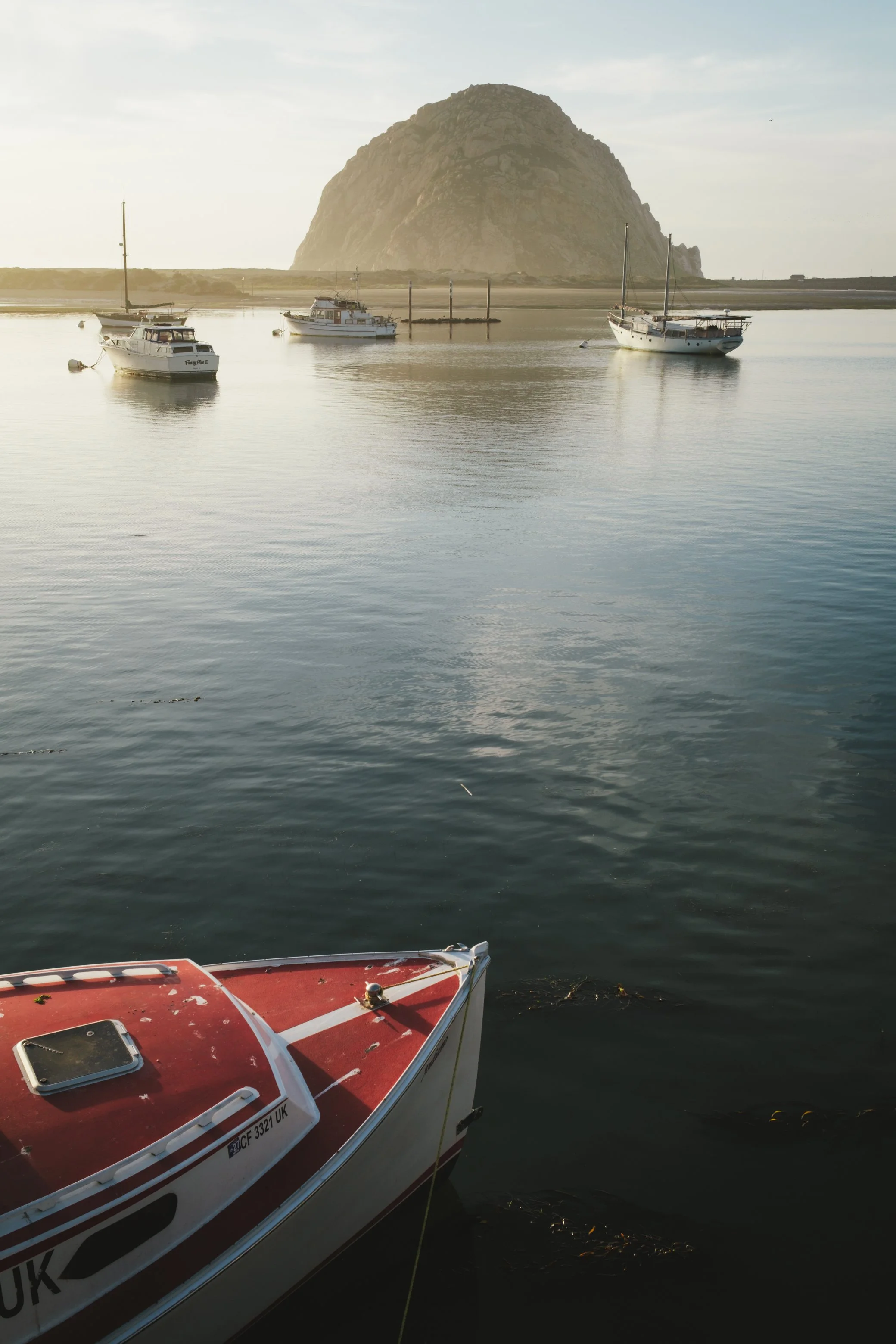
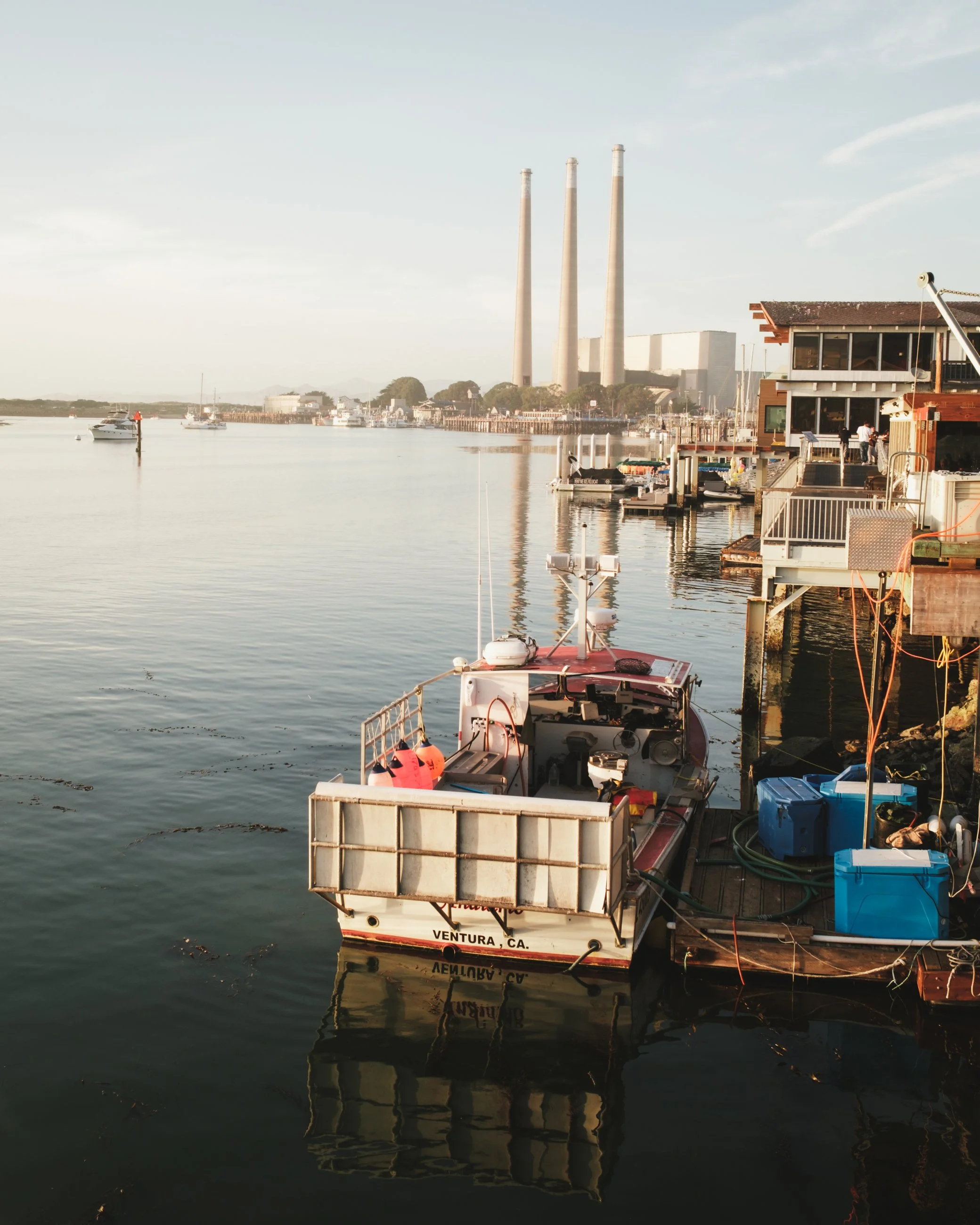
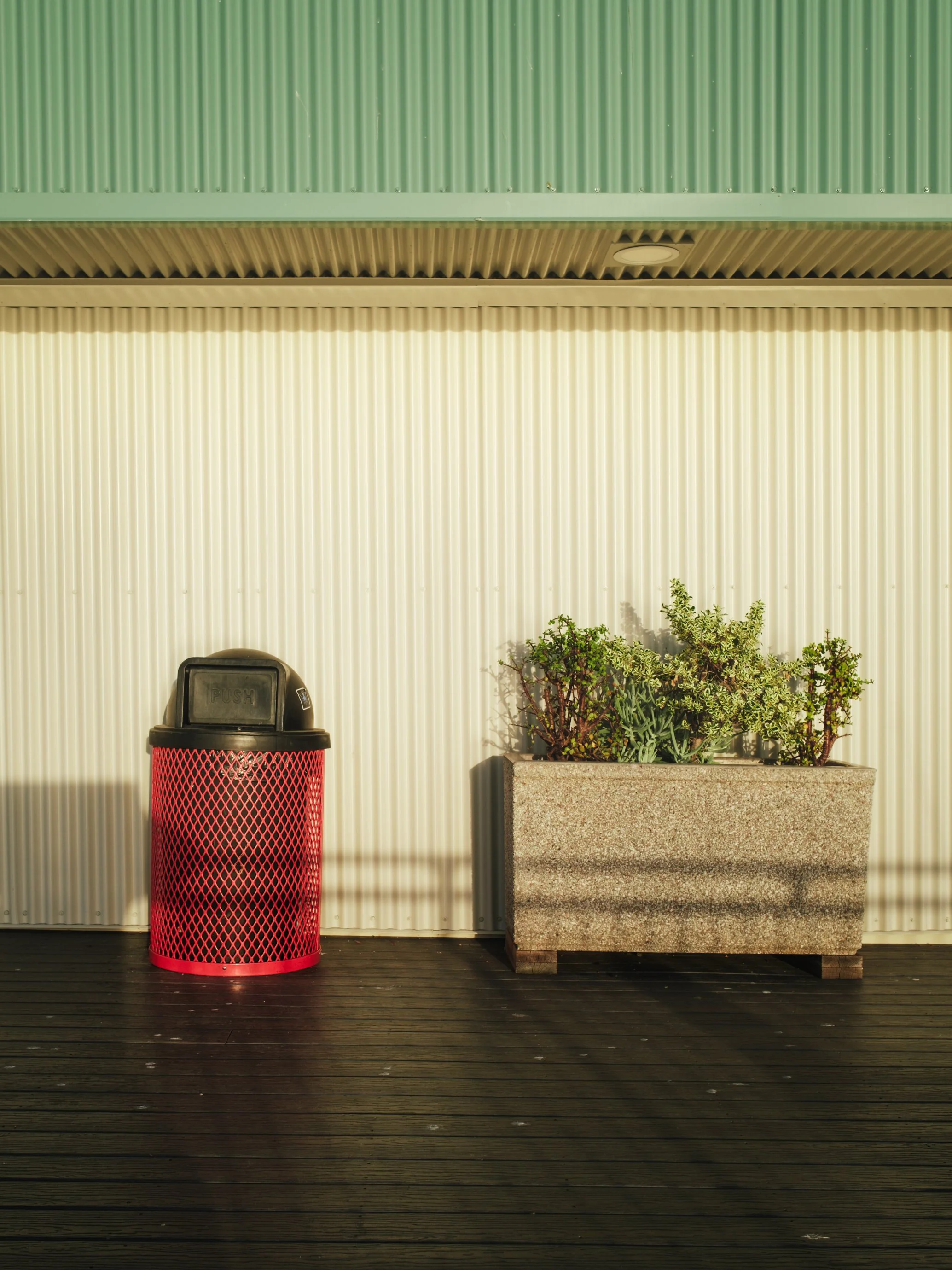
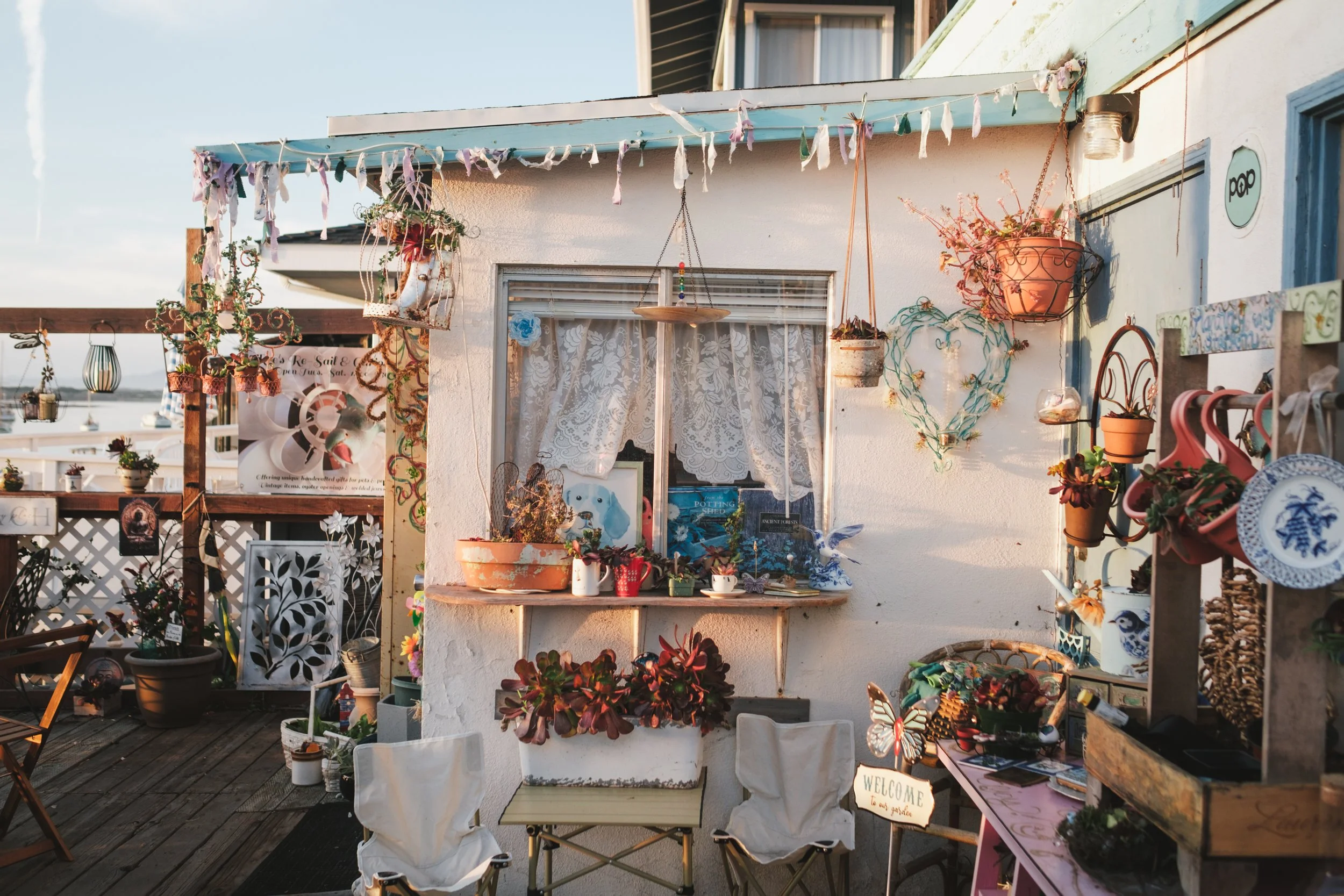
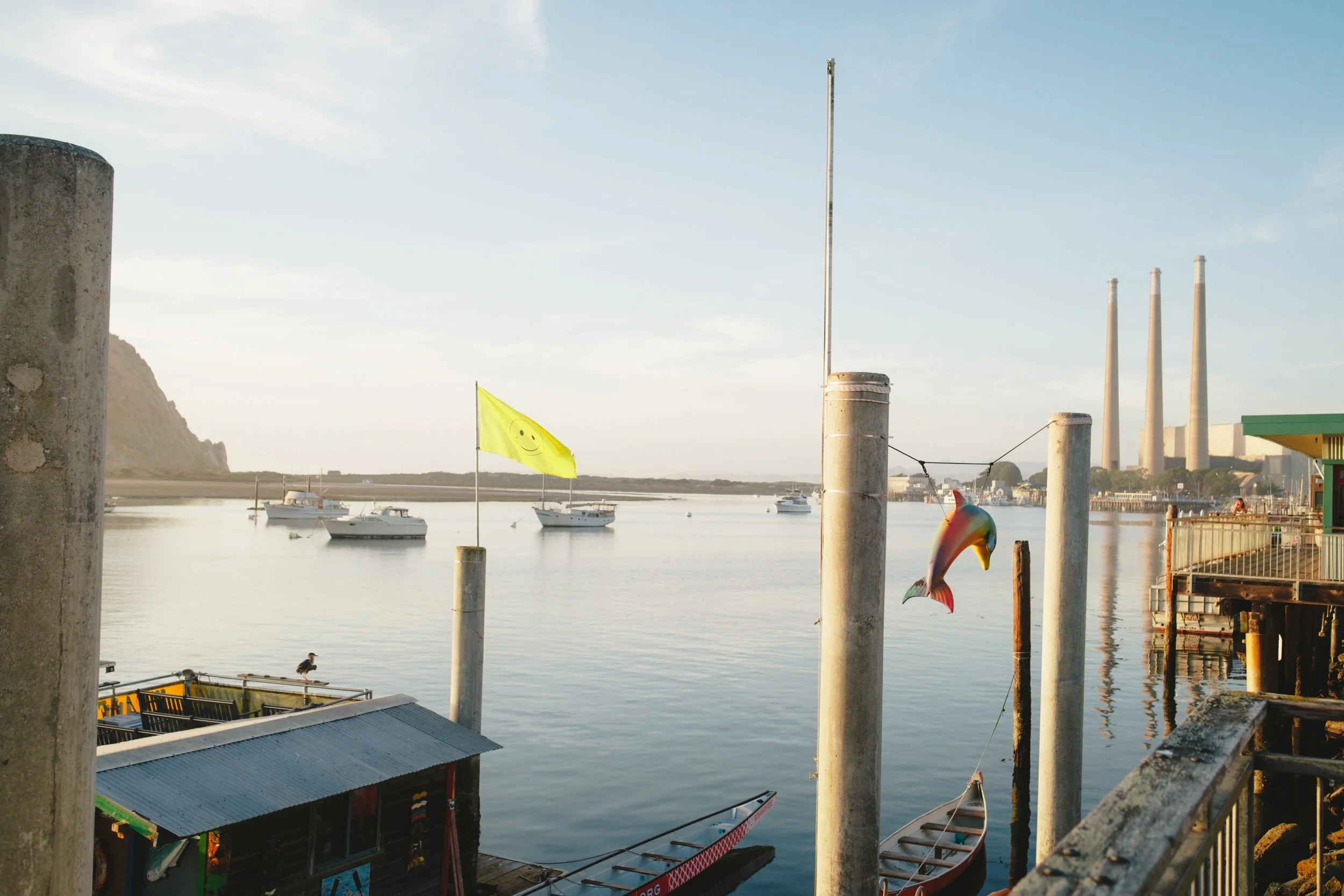
February 1st, Sunday, a quick walk in Morro Bay during sunset on the Embarcadero. These walks after work are an important part of my weekly rhythm: my drive home after work is almost an hour and often my brain is consumed by the fog of talking to people all day. It’s a mental salve, in a way, to take an hour or more to unwind in this most familiar of places that somehow, and always, rejuvenates me. At times it might feel too familiar, but it never feels old; never feels like the pathways it opens in my mind are trodden too deep with ennui or repetition. If anything, there is an openness in the repetition of walking around this town. It creates space to know it better all the time. Or if not better, just more.
FAMILIAR: Its use and meaning in English has changed a bit with time. Bear with me while we go down a little etymological rabbit hole.
Our seemingly quotidian use of ‘familiar’ is something like: “oh ya, sure, definitely. I’m familiar with that.” Or in a slightly negative tone: “I’m way too familiar with that/him/her/it/them/they/those/these.” There is, in a sense, a boredom or tedium or physical encumbrance — it weighs on us a smidgen to be too familiar with something. “Oh yes, I’m all too familiar with their shenanigans.” It’s too much. A weight. An annoyance. Something we might not want to be familiar with anymore. Or as much.
But words and meanings and connotations are living entities. They morph and transform. Nothing is static about usage. When familiar was born, so to speak, in English, waaaaay back when in about 1200, it possessed an intimacy that we’ve lost over time. Or maybe the better way to say it is: it referred to and named a lived intimacy. Familiar comes from the Latin familiaris, meaning “of the household, domestic, belonging to the family.” But it was wider in meaning than just a family: it included the whole circle of a home—all those bound together by proximity, care, and obligation. Which is why the earliest use of family included servants and workers. It was the entire unit, the closeness of living alongside others, sharing space and routines, developed over time. This closeness of domesticity is the intimacy it referred to.
So it struck me on this Sunday walk with my camera that my sense of familiarity with this place is more than just knowing a place well. It is complexly intimate. And it is more than merely cognitive and intellectual. There exists a somatic awareness of being held within or being a part of something more than myself— it creates its own boundaries. Space expands and retracts with every step, like a giant lung. And I wonder: how does familiarity function in this context? What is this knowing that signifies something wider and more rooted than just existence in a place? Why does it matter? What is happening?
What it feels like is this: when I walk through this town, this place I’ve been enjoying for basically my entire life, photography and walking become a unified process in which I re-familiarize myself with the town — a kind of re-entry into, and remembering of, the relationship I have with it, built over time, slowly, almost subconsciously. It’s not about capturing images per se, but about attention and unfolding another layer of the relationship. Through the walk I learn something new. I see a corner of it I haven’t seen before. Seagulls squawk and wail; oysters washed in running water; voices overlap in tuplets; this blanket of misted light softens everything. Pre-cognition it’s all abstract, but instantly my memory refashions a familiar story. I appreciate it differently. Richness accumulates. This openness maintains and motivates me. Like every meaningful relationship in our lives, it deepens through presence and repetition. Awareness and repetition. Understanding and repetition. And through time it becomes a home, a house, the hallowedness of earned domesticity.
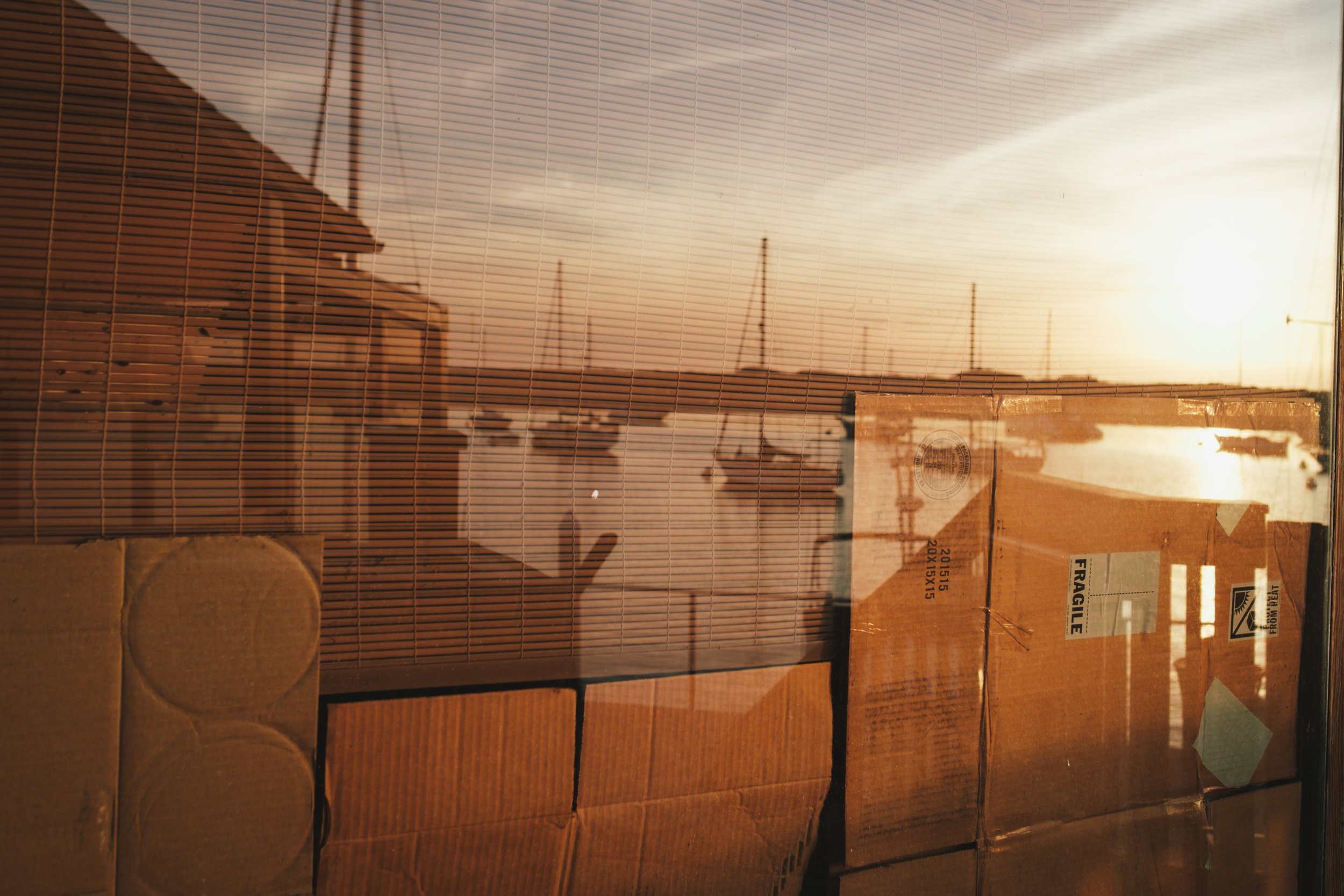
There’s a story in our family lore. We were eating at the Hofbrua in its old location on the south end of the Embarcadero in this small complex with a brick facade and a back patio that overlooks the harbor. Currently the building is half empty. A coffee shop and ice cream shop are the two businesses open street side. The back two businesses with the view are no more and exist as construction sites: open squares in concrete floor, wheelbarrows full of sand, drywall cut away in irregular polygons, copper piping exposed, one window with its shade drawn down and cardboard covering what the shade cannot, sentinel stacks of chairs. The old Hofbrau location is one of these construction sites. It's so perfectly laid out as construction site that it seems like a diorama and not an actual place of work. I imagine in the morning people stand outside the work-diorama to watch work be done. Staring curiously through the window with coffee in hand, steam rising, noting how the workers work, commenting on how they’d do it if they were in charge, then casually noting how crisp the morning is and how nice it is the coffee shop serves strong, hot coffee. Their backs are to the harbor. They hear the dingy pass while making waves. Occasionally one of them will turn around, stare at the boats dispersed at moor, stare at the sandspit out farther, listen to the sound of waves crashing against the breakers. This, too, all too familiar to them all.
So in this story I'm 4 and ornery. I didn’t listen well, as 4 necessitates. We were eating lunch in the Hofbrau. And apparently I was walking on the bench seating, these long, thick planks of wood covered in resin. Back and forth I went, feeling like a king of sorts, 2 feet of the ground. And apparently my family kept saying, “get down, Nathan, you’re gonna fall. Get down!” I don’t remember any of this, mostly because I don’t have many memories from that time in my life. But apparently I kept doing what they said I shouldn’t do, as 4 necessitates. I think somewhere deeply embedded in my mind is a faint memory of standing on the bench, wearing a pair of blue velcro shoes with red stripes and maybe poofy corduroy shorts. Perhaps that’s all constructs from photos I’ve seen over the years. If I strain I see my family as shadows or outlines of figures. I don’t think I was scared standing on the bench. But apparently the game I played didn’t last long because I made it to the end of the bench not knowing I was at the end of the bench. Over I went. Tumble I did. Face plant on the concrete. I do remember the sound it made. That is still a familiar sound.
I am not sure if it makes sense to speak of a place, a person, or thing as too familiar, although I know that impulse well. How could we talk about being too close to something without also undermining a layer of our own self that informs that familiarity? To say it’s too familiar is to say it’s too close or too intimate. But closeness is relational, and to stand in relation to a place as if we know it too well is to unwind the deep relational skein we become when truly inhabiting a place. When we cross the threshold of relationship with a place where we think we know it too well, I think it helps to step back and turn one’s attention to how internally prolific that dynamic actually is, and what we can unfold within it.
Because what is offered on the other side of investigating that relationship is a familiar face: our own, reflected and refracted back to us, shaped and reshaped through time and attention.
And it’s here where I always come back to how genuinely strange and interesting it is that holding a camera and walking around allows for this openness. It’s true that in one way a camera is just a tool to capture light as image. But in another way, it’s a tool to sharpen consciousness in the moment, to focus it, to let oneself sink into wherever one is. I think I prefer that. That’s why I keep doing it.
